Optimal IHC Solution
Are my IHC slides finished yet?
Dr. Amaya is a pathologist, and every day she ends up with incomplete cases piling up on her desk as she waits for the necessary IHC slides to eventually make their way to her so she can finally sign out the report for the patient. When the slides will arrive is a mystery. Slides she expects to get today may not end up on her desk until tomorrow or maybe even the next day because of a variety of delays reported by the laboratory. Dr. Amaya witnesses the hard work and dedication by the laboratory staff, so she understands that the delays are not for lack of effort. Often the technicians appear overwhelmed, though. Sometimes the slide quality she receives is questionable, and she hates having to ask for repeats because she knows that it adds more work for the already busy laboratory. The patient comes first, though, and having the proper diagnosis and providing timely reports is too important. Because of this, Dr. Amaya often finds herself asking the same question again and again, “Are my IHC slides finished yet?”
Rachel is the supervisor of the laboratory. She dreads picking up the phone after lunch every day because it is typically Dr. Amaya calling to ask, “Are my IHC slides finished yet?” Rachel does not mind having the opportunity to hear from Dr. Amaya because Rachel knows she is a great pathologist and is just trying to finish out cases for patients. She dreads the call because often the delay has been the result of some unpredictable event that the lab has difficulty controlling. Sometimes there are delays related to processing, embedding, or microtomy. Sometimes delays are the result of running the actual IHC stain itself. Sometimes the delays are the result of being short-staffed. Working in the lab can be stressful some days. Processing, embedding, and microtomy are all tasks that can be long and tedious. Any delay or error throughout the entire histology process can then delay or impact the IHC staining at the end. Even at IHC there can be staining inconsistencies that lead to poor quality or re-stains. Rachel likes working with Dr. Amaya, but she longs to be free from hearing that dreaded question, “Are my IHC slides finished yet?”
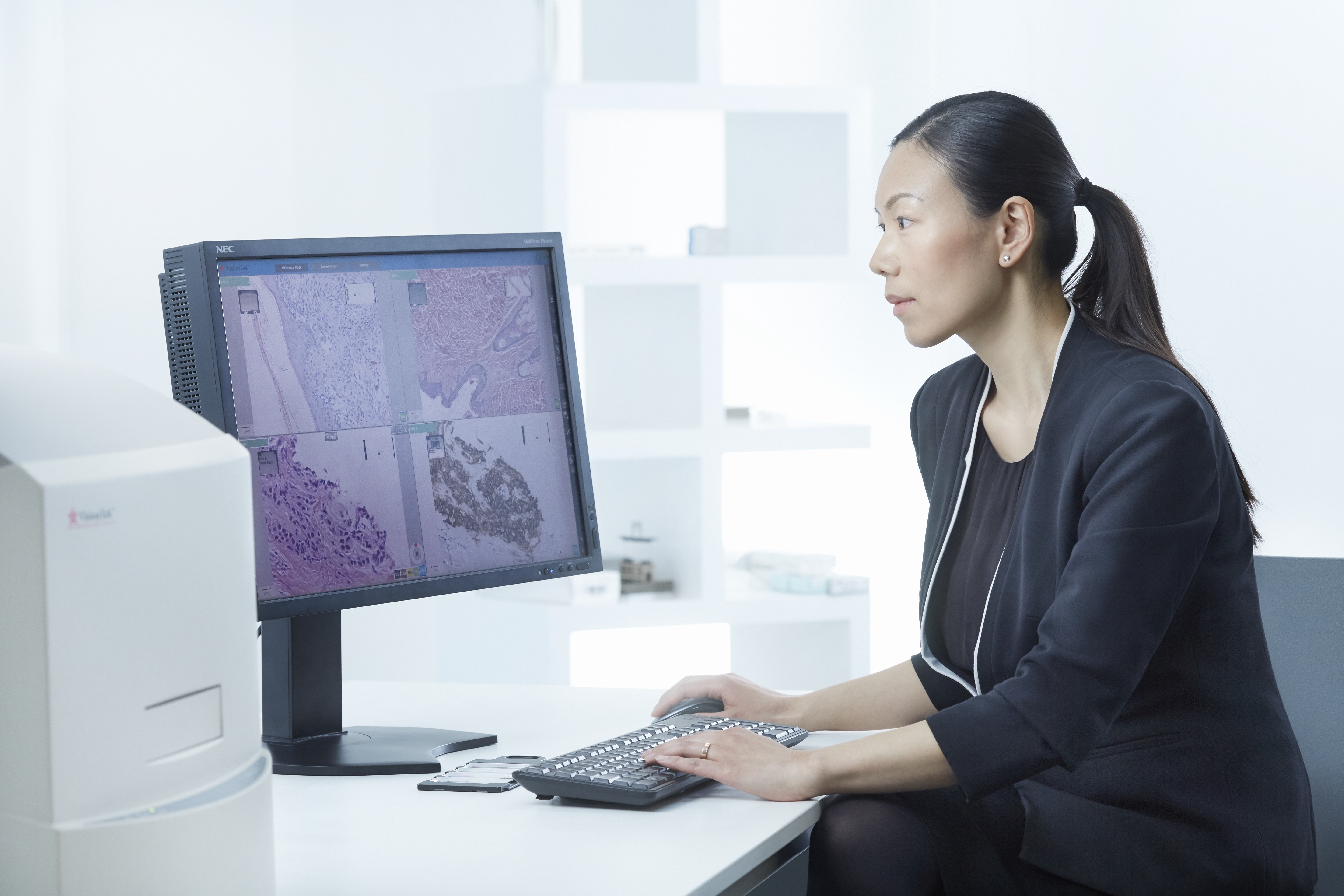
Sakura Finetek SMART Automation systems for processing and embedding and the Tissue-Tek Genie® IHC System provide THE best solution for laboratories to enable the fastest and most efficient delivery of optimal IHC quality.
The road to fast, efficient delivery of optimal IHC quality really begins during the pre-analytical processes in histology. Conventional tissue processing and manual embedding are inefficient processes that consume considerable amounts of precious time and resources. These areas are also prone to risks and errors that can jeopardize tissue and create costly and time-consuming rework. These potential issues may result in delays and have negative impacts on IHC quality before slides have even made their way to advanced staining.
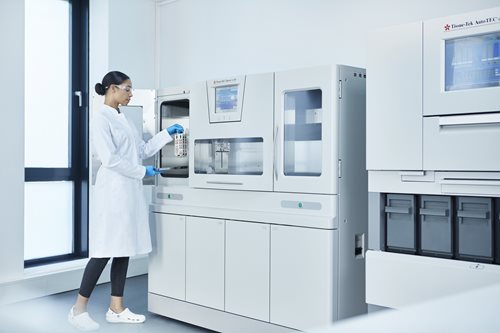
SMART Automation from Sakura Finetek provides a LEAN solution to these problems, providing enhanced safety while saving considerable time, money, and resources. The Tissue-Tek Xpress® x120 Rapid Tissue Processor is the only tissue processor with a completely error-free reagent system, ensuring that patient tissue remains safe so Rachel and her team does not have to worry about making a mistake that could jeopardize a patient’s tissue or negatively impact the IHC. The Tissue-Tek AutoTEC® a120 Automated Embedding System utilizes the Tissue-Tek® Paraform® Sectionable Cassette System to ensure that orientation of tissue is properly preserved from grossing through to microtomy, thereby eliminating the risk of orientation mistakes, tissue loss, and cross contamination for increased patient safety. This unique embedding automation solution is capable of substantially decreasing errors that commonly occur during manual embedding by up to 44%, protecting tissue and removing that wasteful rework from Rachel’s to-do list.
SMART Automation also enhances laboratory efficiency to shorten laboratory TAT. Utilizing four, robotic retorts, the continuous flow of the Xpress x120 means that Jane can load tissues when she is ready instead of waiting to collect large batches for conventional processing that eat into the lab’s TAT. The Xpress x120 can process multiple tissue runs simultaneously with no slowing down or stopping in between runs for a cleaning cycle, which gives Jane and her team increased workflow flexibility and speed. With rapid processing capabilities beyond just biopsies, the Xpress x120 reduces the processing time of large tissue specimens from 8 hours on a conventional processing platform to only 2.5 hours, saving up to 5.5 hours with comparable results for both H&E and IHC. Combined with the continuous automated embedding throughput of up to 120 Paraform Cassettes per hour on the AutoTEC a120, SMART Automation provides high-quality, safe tissue processing, consistent clean blocks, and improved turnaround time of up to 10 hours from grossing to microtomy versus conventional systems.
MWEB0290 Rev.A